
Bestselling author Ashwin Sanghi says that it is indeed possible to 'attract' good luck!

Modi's tweets talk about the celebration of democracy and also puts emphasis on the education of girls, says Mayank Mishra

In his fifth address as President, Pranab Mukherjee asked authorities and institutions of the State to adhere to the 'dignity' in discharging their duties.

The soul of India resides in pluralism and tolerance. This plurality of our society has come through assimilation of ideas over centuries. Secularism and inclusion are a matter of faith for us. It is our composite culture which makes us into one nation.
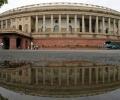
A reformed Planning Commission should reflect the diversity of Indian debate.

'In North India, brother kills brother for a small piece of land. So if the perception goes that the government has come to snatch away land, then the issue can go to any extent.'

'To expect that he has a magic wand to resolve all differences and announce breakthroughs in all issues during his first visit to the US is to be unrealistic,' says Ambassador T P Sreenivasan.

The Economic Survey was tabled in the Parliament on Friday.

'Fearlessness, courtesy, humour, wide interests and wisdom, deep commitment to science and technology, passion for the environment, objectivity and the ability to see many things through not only a national but also an international prism.'
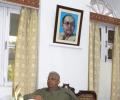
'As a governor, I have every right to speak my mind if I feel the security of my country is at stake.' 'Why is it that we would have to shed tears when Muslims are killed or tortured, but have to keep mum when the Hindus receive the same treatment?'

The former finance minister also criticised Prime Minister Narendra Modi over the words he chose to attack his predecessor Manmohan Singh, saying he should remember that the Chair he sat on was used by Pandit Jawaharlal Nehru and even Atal Bihari Vajpayee and hence he should use right language.

'Where have we failed, as parents, teachers and leaders, that our children have forgotten all tenets of decent behaviour and respect for women?' President Pranab Mukherjee asks the nation on the eve of Republic Day.

As India gears up to honour its pravasis on January 9 to mark their contribution in the nation's development, rediff.com presents perspectives from eminent writers on the Diaspora. Kicking off the series is Ambassador T P Sreenivasan, who points out that the change of the Diaspora policy put in place by Rajiv Gandhi following the military coup in Fiji and his decision to stand by them, was the one defining moment in India's dealings with its overseas family.

What is so honourable in defending or dis-honourable in not defending the 'Johnson line' in Aksai Chin? That is a question that needs to be asked to the Indian shouting brigade. The Chinese also need to be asked as to why they wish to implement the 'MacDonald McCartney' line drawn by British Imperialists? asks Col (retd) Anil Athale.
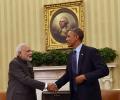
Narendra Modi would have done well to take a few more months before he agreed to receive or call on heads of countries like Japan, China, and the US. The prime minister is to settle down in his job and it was too soon for him to have full awareness of the nuances of intricate international issues, says B S Raghavan.

It is rare for communal riots to spread to rural areas. The UP riot is the first time after the September 1969 Gujarat riots that a rural area have been affected. Electoral politics which divide society in majority/minority, going on since the early 1990s, is a major contributing factor to this heightened tension between communities, says Colonel (retd) Anil Athale in the first of a two part series.

The ongoing vicious game between Delhi and the so-called 'separatist' militias has severely blighted the Nagas' life and gutted their dignity, says Ravindra Narayan Ravi
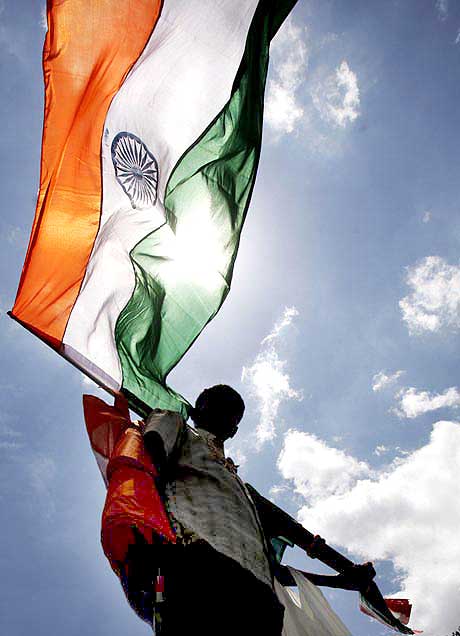
How has the Indian State, in principle and practice, given shape to the essential ingredients of the secular principle and composite culture?
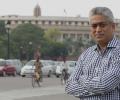
On the eve of the release of his book, 2014: The election That Changed India, Rajdeep speaks candidly in an interview with Sheela Bhatt/Rediff.com.
